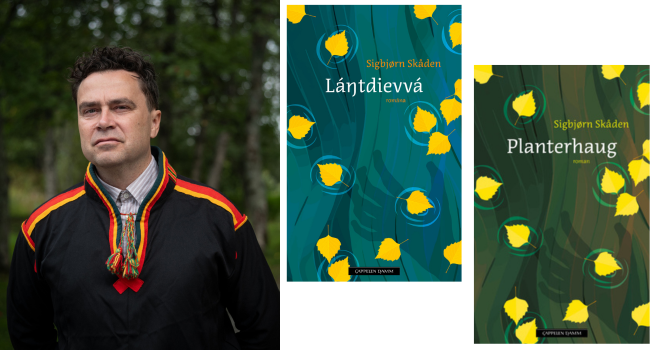
Sigbjørn Skåden's novel Backwoods Fable is loved by critics and was nominated for prestigious Brage Prize – now it's nominated to the most important literature prize we have in the Nordics. The novel was published simultaneously in Norwegian, and in Thorne Sami under the title Láŋtdievvá. Skåden is nominated with both versions of the novel.
Backwoods Fable by Sigbjørn Skåden
When the old drunkard Nilsen dies in the Norwegianized sami village Planterhaug, once known as Láŋtdievvá, no one suspects anything criminal. Yet, the following autumn Inspector Huuva from the Oslo Criminal Police arrives in the village to investigate the death.
Huuva is determined to uncover the truth about the village and find out about his father's fractured family history. Through his investigation, Huuva discovers that something Evil is haunting in the village, and the case propels him deep into the soul of Planterhaug. But is he truly uncovering new truths, or is he merely treading water in a place where secrets have long been silenced?
Backwoods Fable is a novel about identity, about what it means to be Sami, and about the search to find home – whatever that may be. It is both a deeply serious and deeply humorous novel about nature, culture and belonging.
English sample translation & synopsis available
Nominated for the Brage Prize 2025 / Best work of fiction
A NORLA selected title
Extract from jury's statement:
Backwoods Fable is a deeply poetic and melancholic novel with great richness of detail and a literary surplus that is rare in Norwegian contemporary literature. Skåden uses Nynorsk, Bokmål, and Sami interchangeably. This linguistic alternation highlights the characters's belonging, distance, and positions of power. The novel's play with both language, family history, and symbols gives the text a clear historical weight. Huuva's investigation points both backward towards the Norwegianization policy and forward towards questions of Sami identity in today's Norway. In Backwoods Fable, the power relations are reversed: it is Huuva's outsider status and limited understanding of the Sami community that emerge most clearly.
Despite the novel being characterised by a consistently heavy and somber mood, it is rich in unexpected turns. This unpredictability drives the reader further in the hunt for answers – not only to who died, but to what Planterhaug is, and what the village conceals. All in all, Backwoods Fableappears as a particularly original novel with strong linguistic and formal qualities, which makes it stand out clearly in Norwegian contemporary literature.