Children's Books2016 · 176 pp
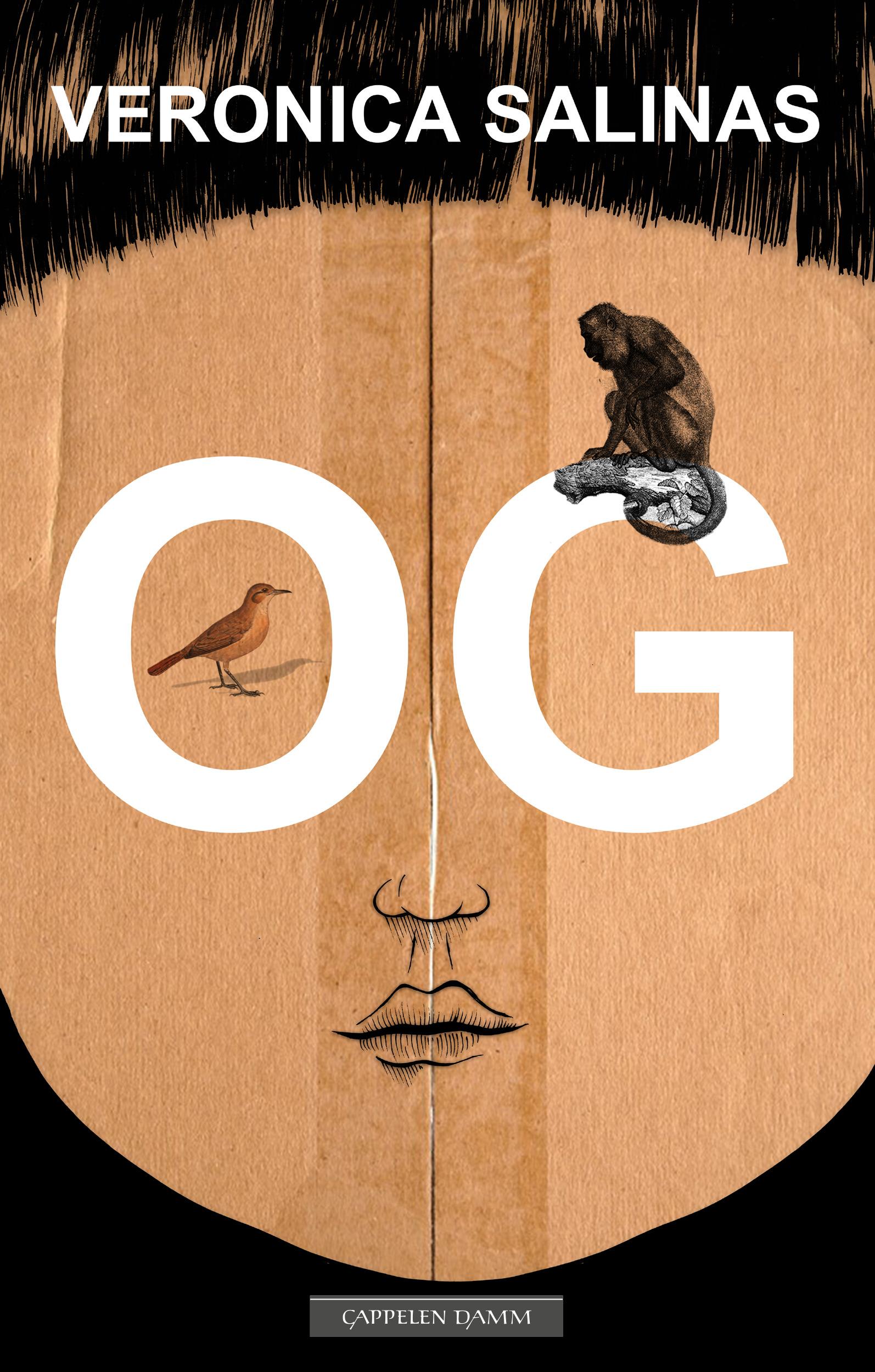
And
Veronica Salinas
The first person narrator in this novel is going through an identity crisis. She is new in Norway, where she has come to work as an au pair. Her daily routine consists of work and language courses. She is very homesick for Argentina but she cannot go back.And (Og) is a plain and at the same time complex novel about identity and language. A novel with a different, painful and often humorous look at Norway and the people who live there, and a novel about the land left behind.WHITE RAVEN 2016
And is written in simple language, with a novice’s typical addition of strange and uncommon words looked up in the dictionary. When someone is in the early stages of learning a language, they can end up unintentionally expressing themselves quite poetically. You’re at the mercy of short sentences, unexpected metaphors. Salinas recreates this state with short, prose-like chapters. ... Og is a charming little book about going from one place to another, and recognizable for anyone who has learned a new language as an adult.DAGENS NÆRINGSLIV
The book can be read as a political story about upper and lower classes, and it can also be interpreted as a personal, individual story about social and geographical mobility, and about the search for belonging. Personally, I also think it makes sense to look at it as a story about generations of class change, as a kind of global sociological case.BARNEBOKKRITIKK.NOThe first-person narrator in this novel experiences what Ludwig Wittgenstein observed: “The limits of my language mean the limits of my world.” In this story, an Argentinian au pair girl in Norway becomes painfully aware of the fact that, without language, there can hardly be any closeness, any “I”. If one lacks words, one cannot express what one is thinking, nor what one is feeling. One becomes invisible. Veronica Salinas, herself from Argentina, has written her novel in her adopted language of Norwegian. With precision and without pathos, she describes loneliness and sadness, but also persistence, since the first-person narrator gradually masters the language and the country, even though she remains “an other”. “Og” (And), the novel’s ultra-concise title, hits the mark: the narrator develops new facets of herself, without forgetting her roots.From the White Raven presentation of the book.