Kul i brystet. Året vi ble syke
Line Norman Hjorth og Vigdis Hjorth
Innbundet

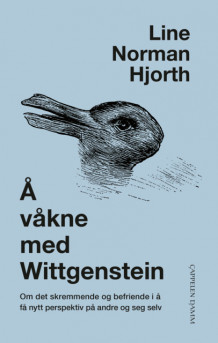
| Norwegian title: | Å våkne med Wittgenstein |
| Norwegian subtitle: | Om det skremmende og befriende i å få nytt perspektiv på andre og seg selv |
| Author: | Line Norman Hjorth |
| Binding: | Innbundet |
| Year: | 2026 |
| Pages: | 112 |
| Publisher: | Cappelen Damm |
| Språk: | Bokmål |
| ISBN/EAN: | 9788202920647 |
In this inspired essay, Line Norman Hjorth explores the possibilities and limitations of language. The eponymous protagonist works as a church minister while struggling to write a text about «the topicality of philosophy and the connection between skepticism and the culture of insult, or was it deconstructivism and power criticism? Alas, I hardly knew it myself.»
By chance, she comes into contact with the younger nurse Mari. This meeting and the conversation that occurs between them inspire her in a way that she does not initially understand. But something is happening, a movement is underway.
The dialogues and reflections they make do not yield any clear conclusions, but discuss questions that give Wittgenstein’s philosophy of language a surprising topicality and echo current debates about language and interaction.
«Something in me still believed that it was the offended who had to practice recognition. At the same time, I realized that it could just as well be as she had suggested on the bench, that it was I who was the blind one and who projected my darkness onto the offended.»
One of this autumn’s most original reading experiences
«... at once strangely intricate and self-evident. It is playful and serious. Exuberant, funny, strange, and irritating. ... By staging how the perspective we see from, and the language we choose to use, help color our experience of the world, Waking Up with Wittgenstein is not only one of this autumn's most original releases – but also one of the most relevant.»
Vårt Land
A charming gateway to Wittgenstein's philosophy of language
«...a thoroughly charming book (...) All in all, it is a kind of cheerful enlightenment project in a humanistic spirit [...] Precisely this simple message of community, almost at the level of UN Day celebrations, makes the book impressive: Being able to make me feel the truth in these kinds of thoroughly examined and oft-repeated ideas requires compelling narrative craftsmanship.»
Morgenbladet
Revitalizes the literary dialogues of the Enlightenment for our own time
«...through meticulous attention to the functions of language—Hjorth is able, in true Enlightenment fashion, like a modern-day Diderot, to show what such a process of realization might look like, rather than merely explaining it. I cannot help but admire this, and delight in how such an old concept can be given new life in what must be one of the quirkier books the autumn literary season has to offer.»
Klassekampen
Line Norman Hjorth og Vigdis Hjorth
«... på en og samme tid merkelig innfløkt og innlysende. Den er leken og alvorlig. Overskuddspreget, morsom, merkelig og irriterende. . ... Ved å iscenesette hvordan perspektivet vi ser fra, og språket vi velger å bruke, er med på å farge vår opplevelse av verden, er Å våkne med Wittgenstein ikke bare en av høstens mest originale utgivelser – men også en av de mest aktuelle.»
Hilde Slåtto, Vårt Land«en riktig så sjarmerende bok, som også gir en underholdende og noe gjentagende inngang til Wittgensteins språkfilosofi. I det hele tatt er det et slags muntert opplysningsprosjekt i humanistisk ånd....
[...] Nettopp dette enkle budskapet om fellesskap, som nærmest er på FN-dagen-nivå, gjør boken imponerende: Å kunne få meg til å føle på sannheten i denne typen gjennombelyste og gjentatte ideer krever et overbevisende, narrativt håndverk.»
Eirik Riis Mossefinn, Morgenbladet«... gjennom en nitid oppmerksomhet mot språkets funksjoner – kan Hjorth på ekte opplysningsvis, som en annen Diderot, vise hvordan en slik erkjennelsesprosess kan se ut, heller enn å skulle forklare den. Jeg kan ikke annet enn å beundre dette, å fryde meg over at en såpass gammel idé kan få nytt liv i det som må være en av de snålere bøkene bokhøsten har å by på.»
Even Teistung, Klassekampen